

Cultivating Leaders | Part 8. In Part 7 — Why Co-Leadership Between Men and Women Outperforms Solo Leadership, I made the case that ego is the bottleneck: every leader who co-leads well can manage their own ego before they try to manage anyone else’s. That’s not a coincidence. Ego and power run on the same wiring. In this installment, I get specific about power itself — the two kinds every executive holds, why confusing them is one of the most common and most damaging errors senior leaders make, and how to tell which one you’re actually running on.
Positional Power vs. Personal Power: What’s the Difference?
Every leadership role carries two simultaneous sources of power, and confusing them is one of the most common errors senior executives make.
Positional power is what your title gives you — the authority to hire, fire, promote, reward, and sanction. It’s real, and you should use it. But it’s borrowed. It belongs to the organization, not to you. The moment you treat it as a personal possession, you start making decisions that erode the trust it requires to function.
Personal power is what you earn — through the expertise you’ve built, the goodwill you’ve accumulated, and the emotional intelligence you’ve developed over time. This is the power that doesn’t evaporate when you leave a role. It’s the reason people seek you out even after the title is gone.
“It is not power that corrupts. It is people who do not understand how to use power who corrupt power.”
The most effective leaders I’ve coached hold both at once — and know, in any given moment, which one the situation actually requires.
How Positional Power Gets Corrupted — Usually Slowly
It rarely starts with a dramatic moment. It starts with not asking for feedback because you’ve stopped feeling like you need it; with surrounding yourself with people who agree with you, because pushback started to feel like disloyalty; with using your authority to close down conversations that make you uncomfortable.
Each of those choices is defensible in isolation. Together, over time, they build an insulated, brittle organization — one where the people closest to the real problems have learned to stop surfacing them.
The leaders most at risk of this pattern are often the most successful ones. Success creates insulation. Insulation removes feedback. And without feedback, even the best judgment starts to drift.
What Keeps Positional Power Healthy
- Communicating honestly, even when the message is hard
- Asking for feedback from every level of the organization — and doing something with it
- Confronting underperformance directly, instead of letting it quietly lower the standard
- Building real working relationships, not transactional ones
- Sharing power with people you trust — leaders who share power don’t diminish it, they multiply it
How to Build Personal Power as a Leader
Personal power has three sources: continuous learning, the deliberate development of judgment — especially around ego and influence — and the steady accumulation of goodwill in how you treat people day to day.
Goodwill isn’t manufactured in a single interaction. It’s built across hundreds of moments where you chose integrity over convenience, listened when you could have steamrolled, and gave credit instead of taking it.
Meditation and Executive Judgment
I’ll add something personal here. Since 1972, I’ve practiced Transcendental Meditation — I studied with Maharishi Mahesh Yogi in Switzerland and have taught the technique to more than seven hundred people. I raise it in the context of power because the research is relevant: TM practice strengthens the frontal lobe, which governs judgment, decision-making, and ethical reasoning. Cortisol can drop by up to 30 percent. Serotonin increases.
The result isn’t calmness for its own sake. It’s what I call resilient stillness — the ability to stay centered under high-pressure conditions rather than reacting from a place of threat or insecurity. For leaders operating at the C-suite level, that’s not a luxury. It’s a performance variable.
Positional power is on loan. Personal power is what’s left standing after the title is gone — and most executives don’t find out which one they actually built until it’s tested. Contact Peter J. Dean, Ph.D. at Leaders by Design, and find out which one you’re standing on.
Cultivating Leaders | Part 9. In the next installment — Unhealthy Ego Check: Avoiding the Slippery Slope — I examine how unchecked ego develops in high-performing executives, the warning signs, and the disciplines that keep authority grounded and credible.
About This Series
Cultivating Leaders
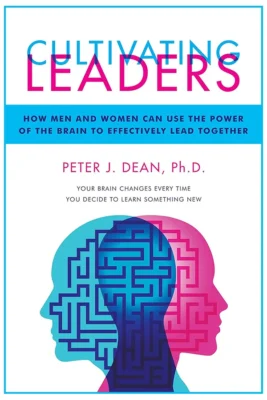
Cultivating Leaders: A chapter-by-chapter leadership series from executive coach and leadership scholar Peter J. Dean, Ph.D., draws on more than forty years of coaching C-suite executives to reveal how the brain shapes — and constrains — the way we lead. This blog series brings those insights to life one chapter at a time.
Each post goes beyond theory. You’ll find the neuroscience behind executive behavior, practical disciplines for leading under pressure, and a clear framework for building the self-awareness, ethical authority, and communication skills that distinguish great leaders from merely good ones.


