

Cultivating Leaders | Part 9. In Part 8 — Power Check: Positional vs. Personal Power in Leadership, I made the case that positional power is borrowed, personal power is earned, and the leaders most at risk of confusing the two are often the most successful ones: success creates insulation, and insulation removes feedback. This installment looks at what drives that insulation — unhealthy ego in leadership — how it develops in high-performing executives, the warning signs, and the disciplines that keep authority grounded and credible.
The Leadership Self-Assessment Gap: 80 Percent vs. 20 Percent
I’ll start with a number: 80 percent.
In my coaching work, roughly 80 percent of executives rate their own leadership impact as “very good.” When I interview them and gather feedback from the people who report to them, fewer than 20 percent actually land in that category.
That gap doesn’t mean most senior leaders are bad at their jobs. It means most have a significant blind spot between how they experience their leadership and how the people around them experience it. In my experience, that gap is usually an unhealthy ego hiding behind a façade of false bravado.
What a Healthy Ego Looks Like in a Leader
It rarely looks like the cartoon version of arrogance. More often it looks like this: meetings where the discussion is really just waiting for the leader to speak. Feedback that gets heard, acknowledged, and quietly ignored. Decisions that get revisited when they don’t land, without anyone willing to say why. Talented people who leave — not for more money, but because they stopped feeling their work mattered.
In Cultivating Leaders, I name the specific shifts to watch for:
- Confidence becomes arrogance
- Negative feedback feels like a threat — and the messenger gets punished
- Every situation gets interpreted through your own agenda
- Others get disempowered in the name of control
- “Our way” becomes “my way,” and “we” becomes “us vs. them”
- Truth gets used as a weapon
- Loyalty becomes blind, and tolerance becomes indifference
“Ignorance doesn’t know in the mind. Arrogance doesn’t care in the heart.”
The High-Performance Trap
Here’s what makes this so dangerous at the C-suite level: the behaviors that signal an unhealthy ego often look, from the outside, like strength. Decisiveness. Focus. High standards. The leader who doesn’t tolerate mediocrity and moves fast.
Over time, those same behaviors build an environment where the best people stop bringing their real thinking. The people who stay learn to say what they think the CEO wants to hear. The leader operates on increasingly incomplete information, and the organization starts optimizing for the appearance of performance rather than performance itself.
The record isn’t subtle. Kenneth Lay and Jeffrey Skilling at Enron. Dick Fuld at Lehman Brothers. Dennis Kozlowski at Tyco. Each was so caught up in their own success and power that they couldn’t see where they had crossed the line — and no one around them was willing or able to tell them.
How the Slippery Slope Starts
The CEO of a major oil company once said there was no one on his board who wasn’t a personal friend of his or of another board member — and that he would never bring in anyone who didn’t fit that description. He saw loyalty and stability. What he had actually built was a rubber stamp: no diversity of thought, no genuine challenge, and little progress. Contrast that with Roger Carr, chairman of Centrica and Cadbury, who argued that boards lacking diversity miss out on valuable insight and innovation.
The slope is gradual precisely because each step feels reasonable at the time. Surrounding yourself with like-minded people feels efficient. Limiting feedback feels decisive. Protecting your authority feels responsible. Underneath, it is usually fear — of not being seen as a leader — and the response is to control every interaction. It’s only in retrospect, and often only from outside the organization, that the pattern becomes visible.
What a Healthy Ego Looks Like
A healthy ego isn’t the absence of confidence. It’s confidence calibrated to reality and balanced with empathy. The way I put it in the book: healthy ego plus empathy equals emotional strength in your position power.
Leaders with healthy egos are open to continuous self-development. They test their fears instead of defending against them. They hear hard feedback without personalizing it. And they’re curious about what they don’t know — which is the antidote to insulation, and the quality that separates leaders who keep developing with seniority from those who stop.
You can see it in the room. People disagree without fear. Credit gets shared. Title and politics don’t intimidate anyone into silence.
Empathy: The Discipline That Keeps Ego in Check
Empathy is what brings the ego back into a healthy zone. When someone brings strong emotion to you — anger, frustration, fear — your ego pushes you to out-emote them or defend yourself. The better choice is to listen, empathize, and attend.
Start with a simple question: “Help me understand why you’re so concerned about this.” Acknowledge the emotion directly, without judgment or scorn. Once the emotion is out of the pathway, you can get to the real cause — and to a real solution.
Why Executives Need an Outside Perspective
No one with an unhealthy ego believes they have one. That’s what makes it unhealthy — the self-assessment is compromised by the very condition being assessed.
This is where executive coaching earns its place. Not as a remedy for underperformance, but as a structured, honest mirror that shows leaders what’s invisible from inside their own frame. I’ve worked with highly accomplished executives who were surprised by what their teams’ feedback revealed. That surprise, uncomfortable as it is, is always the starting point for something more effective.
Every executive has a blind spot. The ones who last are the ones who go looking for theirs before their organization finds it for them. Contact Peter J. Dean, Ph.D. at Leaders by Design, and find out what your blind spot is costing you.
Cultivating Leaders | Part 10. In the next installment — Ethics Check: The Fundamentals That Guide Means and Ends — I examine integrity, productivity, responsibility, and respect: the four ethical cornerstones every leader must internalize before pressure tests them.
About This Series
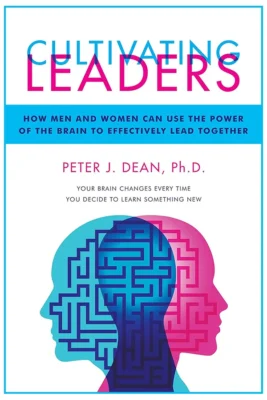
Cultivating Leaders
Cultivating Leaders: A chapter-by-chapter leadership series from executive coach and leadership scholar Peter J. Dean, Ph.D., draws on more than forty years of coaching C-suite executives to reveal how the brain shapes — and constrains — the way we lead. This blog series brings those insights to life one chapter at a time.
Each post goes beyond theory. You’ll find the neuroscience behind executive behavior, practical disciplines for leading under pressure, and a clear framework for building the self-awareness, ethical authority, and communication skills that distinguish great leaders from merely good ones.


