

Cultivating Leaders | Part 5. In Part 4 — The Personality Traits That Separate Good Leaders From Great Ones — I examined how conscientiousness, agreeableness, and openness determine whether senior leaders get better or worse with seniority. The traits that carried you to the C-suite aren’t always the ones that sustain your effectiveness there. In this installment, I get specific: the DISC framework I’ve used for forty years to map behavioral style, expose blind spots, and build the kind of range that makes leaders genuinely adaptable — not just confident.
The Behavioral Framework That Predicts How You Lead Under Pressure
Most personality frameworks give you a label and call it insight. DISC gives you something more useful: a behavioral map of how you operate when the stakes are high, when you’re stressed, and when the people around you don’t think or move like you do.
I’ve been a certified DISC instructor since 1984. I’ve used it with hundreds of C-suite leaders across industries. And what I consistently find is that the problem isn’t the style you have — it’s the style you default to when you stop paying attention.
What DISC Actually Measures
DISC isn’t a personality test in the pop-psychology sense. It maps behavioral tendencies rooted in biology — which is why the patterns are so consistent, and why they surface under pressure in predictable ways. The framework draws on Helen Fisher’s neurochemistry research, which identified four brain systems, each associated with a distinct cluster of temperament traits. I’ve been a certified DISC instructor for decades. I’ve used it with hundreds of senior leaders — and the patterns it reveals don’t change.
The four styles, and the brain systems associated with them:
D — Dominant. Associated with the testosterone system. Direct, decisive, results-driven. D leaders move fast, make calls, and don’t wait for consensus. Under pressure, they become controlling, short-tempered, and stop listening. Their deepest fear is losing control.
I — Influencing. Associated with the dopamine system. Enthusiastic, optimistic, persuasive. I leaders generate energy and buy-in naturally. Under pressure, they over-commit, get scattered, and start managing perceptions instead of problems. Their deepest fear is being ignored.
S — Steadfast. Associated with the estrogen and oxytocin systems. Patient, collaborative, consistent. S leaders are the ones people trust to follow through. Under pressure, they become conflict-avoidant and slow to decide. Their deepest fear is disruption and loss of stability.
C — Conscientious. Associated with the serotonin system. Analytical, precise, thorough. C leaders catch what everyone else missed. Under pressure, they over-analyze, become critical, and withdraw. Their deepest fear is being wrong.
The Trap Most Senior Leaders Fall Into
Here’s what I see at the C-suite level almost universally: leaders who built their careers on D and C — decisive, analytical, results-oriented — and then slowly stopped developing the I and S capabilities that their role actually requires at the top.
“An executive leader’s challenge is to not let the I and S style be overshadowed by D and C.”
Peter J. Dean, Ph.D., author of Cultivating Leaders
D and C will take you far up the org chart. They won’t keep you effective once you’re at the top. The executives who plateau — or derail — are almost always those who over-indexed on one or two styles and stopped building the rest. At the organizational level, you need the full range. You need D to make hard calls. C to think rigorously. I to inspire a vision people choose to follow. And S to build the trust and consistency that keep your best people engaged rather than quietly shopping their résumés.
Reading the Room
DISC teaches more than self-knowledge. It teaches you to read the person in front of you — and adapt before you lose them.
A high-D CEO who runs every conversation like a strategic decision review will lose the thoughtful S leader on their team who needs space to process. A high-I exec who leads every interaction with energy and enthusiasm will frustrate the high-C who just wants the logic. The leaders who build the most effective executive teams are those who can read behavioral style quickly and shift their approach accordingly.
This is not about being inauthentic. It’s about having range — which is exactly what the most effective leaders at every level demonstrate.
How I Use DISC in Coaching
In my practice, DISC isn’t used to categorize leaders. It’s used to open an honest conversation about where a leader’s natural style is working for them and where it’s working against them — often invisibly.
The high-D who doesn’t realize their team has stopped pushing back. The high-C who has turned rigor into a veto over every new idea. The high-I whose enthusiasm has created an organization that moves fast and executes poorly. All of these are common. All of them are correctable. And none of them are visible to the person inside them — which is exactly why DISC is most powerful in a coaching context, not a self-assessment one. In Part VI, we move into one of the most consequential and consistently mishandled dynamics in senior leadership: what neuroscience actually tells us about how men and women lead differently — and what every senior leader needs to understand about that to perform at the highest level.
Building range across all four DISC styles is the work most C-suite leaders haven’t done yet. Contact Peter J. Dean, Ph.D. at Leaders by Design — and find out what that gap is costing you.
Cultivating Leaders | Part 6. In the next chapter, DISC: The Leadership Framework That Actually Predicts How You Behave Under Pressure, I get specific — introducing the DISC framework I’ve used with senior leaders for forty years to map behavioral style, identify blind spots, and build the kind of range that makes leaders genuinely adaptable rather than just confident.
About This Series
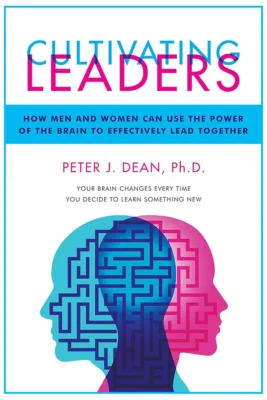
Cultivating Leaders
Cultivating Leaders: A chapter-by-chapter leadership series from executive coach and leadership scholar Peter J. Dean, Ph.D., draws on more than forty years of coaching C-suite executives to reveal how the brain shapes — and constrains — the way we lead. This blog series brings those insights to life one chapter at a time.
Each post goes beyond theory. You’ll find the neuroscience behind executive behavior, practical disciplines for leading under pressure, and a clear framework for building the self-awareness, ethical authority, and communication skills that distinguish great leaders from merely good ones.