

Cultivating Leaders | Part 4. In Part 3 — The Mind’s Interpretation: How Attention and Mindfulness Shape Executive Performance — I examined how attention and mindfulness shape executive performance. For senior executives, that gap is where leadership is won or lost. In this article, I explore how the traits that carried you to the C-suite are real — I’m not here to minimize them. But in four decades of working with senior executives, I’ve watched the same pattern repeat itself: the qualities that drive early success often become the ceiling that limits later development. Conscientiousness, agreeableness, and openness aren’t the traits that get you in the room. They’re the ones that determine how effective you remain once you’re there — and whether the people around you keep bringing you their best thinking or quietly stop trying.
You’ve built a successful career. You have results that speak for themselves. And somewhere along the way, you developed a leadership style that works — most of the time.
But here’s the question I ask every senior executive I work with: Is the way you lead today good enough for where you’re trying to go next?
Not your technical skills. Not your domain expertise. Your personality — the patterns of how you think, how you behave under pressure, and how you show up for the people around you. That’s where the real ceiling is for most C-suite leaders. And it’s the one place most of them haven’t looked hard enough.
Your Personality Has Two Layers
Personality breaks into two distinct components, and understanding both changes how you approach your own development.
The first is character — the traits shaped by your experiences. Your family, your early career, the leaders who shaped you, the failures that recalibrated you. These traits are not fixed. They’re the accumulation of choices, habits, and environments over a lifetime. And because the brain continues to rewire itself in response to what you practice (that’s neuroplasticity, and it works well into your 60s and 70s), your character is still in play.
The second is temperament — your biological baseline, tied to brain chemistry. We’ll go deep on that in Part V. For now, the point is this: both layers are developable. The question isn’t whether you can change. It’s whether you’re willing to do the work.
The Three Traits That Make or Break Executive Performance
In four decades of coaching C-suite leaders, I’ve watched the same three adaptive traits determine who gets better with seniority and who gets worse. None of them are the traits that get you in the room. They’re the traits that determine whether you belong there long-term.
Conscientiousness
This is discipline applied at the highest level — not task management, but the relentless commitment to following through on what you say matters. High-conscientiousness leaders hold themselves to a standard that doesn’t shift based on who’s watching. They build reputations for reliability that create trust faster than any single win can.
Here’s what I see in leaders who are low in this trait: they’re often brilliant. They generate ideas, inspire rooms, and make moves that look bold. But their teams quietly absorb the chaos of promises not kept, decisions revisited, and standards that slide. Over time, the best people stop betting on them.
“Great leaders are ever-increasing their maturity by always learning while they lead.”
Peter J. Dean, Ph.D., author of Cultivating Leaders
Agreeableness
Before you skip this one — agreeableness is not about being nice. It’s about having enough genuine interest in other people to actually lead them.
The most effective senior leaders I know can be direct, even tough. But they’re also genuinely curious about what the people around them are thinking, what they need, and what they bring that the leader doesn’t have. That curiosity is the foundation of real influence.
Leaders low in agreeableness tend to build cultures around themselves. Their teams optimize for not annoying them rather than for doing the best work. That’s a slow but consistent drag on organizational performance — and it’s invisible to the person causing it.
Openness
The higher you go, the more dangerous intellectual rigidity becomes. At the C-suite level, the problems that actually matter are ambiguous, cross-functional, and don’t have clean answers. Leaders who need to be the smartest person in every room stop getting the candid input they need to make good decisions.
Openness isn’t weakness. It’s the cognitive flexibility that lets you integrate perspectives you didn’t think of, change course when the data says to, and build an environment where people bring you their actual thinking — not just what they think you want to hear.
The Real Question
Most executives are strong in one or two of these and have a genuine gap in the third. The one they’re weakest in is almost always the one they’ve been defending against feedback on for years.
Want to pressure-test your own leadership profile? Reach out to Peter J. Dean, Ph.D., at Leaders by Design — executive coaching built for leaders who are serious about what comes next.
Cultivating Leaders | Part 5. In the next chapter, DISC: The Leadership Framework That Actually Predicts How You Behave Under Pressure, I get specific — introducing the DISC framework I’ve used with senior leaders for forty years to map behavioral style, identify blind spots, and build the kind of range that makes leaders genuinely adaptable rather than just confident.
About This Series
Cultivating Leaders
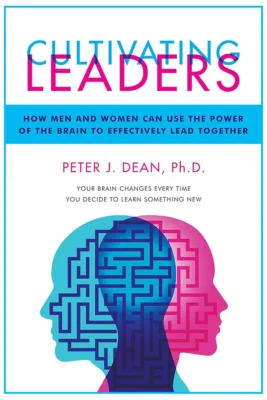
Cultivating Leaders: A chapter-by-chapter leadership series from executive coach and leadership scholar Peter J. Dean, Ph.D., draws on more than forty years of coaching C-suite executives to reveal how the brain shapes — and constrains — the way we lead. This blog series brings those insights to life one chapter at a time.
Each post goes beyond theory. You’ll find the neuroscience behind executive behavior, practical disciplines for leading under pressure, and a clear framework for building the self-awareness, ethical authority, and communication skills that distinguish great leaders from merely good ones.