

Cultivating Leaders | Part 2. In Part 1 — Emotional Intelligence: The Leadership Advantage Most Executives Were Never Taught — I examined how the brain’s survival and attachment systems shape organizational culture — and how emotional intelligence is not a soft skill but the foundational discipline that separates reactive leadership from deliberate leadership. If you have not yet read that post, I encourage you to start there. This week, I go one layer deeper and explore how emotional intelligence opens the door.
From Emotional Intelligence to Self-Knowledge
Emotional intelligence opens the door. But what you find on the other side — or fail to find — is self-awareness. And in my over forty years of coaching C-suite leaders, nothing predicts executive trajectory more reliably than this single capacity.
In my book, Cultivating Leaders, and this series, I am direct about what I have observed: leaders rarely plateau because of insufficient intelligence or technical competence. They plateau because of insufficient self-awareness. The question I examine in this installment is why — and what to do about it.
The Gap Between Perceived and Actual Impact
There is a specific gap that shows up in almost every senior leadership engagement I have conducted. It is the gap between how leaders perceive themselves — their intentions, their style, the way they believe they come across — and how they are actually experienced by the people they lead.
That gap is not a flaw in character. It is a structural feature of positional power. As authority rises, candor declines. Fewer people are willing to tell the person at the top what is actually happening, what they actually see, or how they actually feel. Over time, without deliberate intervention, leaders begin operating inside an increasingly distorted mirror.
The danger is not incompetence. It is unexamined competence. A leader who has succeeded for years can develop the conviction that how they operate is how effective leadership looks. They are not wrong that they have succeeded. They are often wrong about why.
This is where executive coaching creates decisive value. A skilled coach sees what internal stakeholders are unlikely to say and what the leader can no longer see independently. That external mirror — structured, honest, and not subject to the political dynamics of the organization — is one of the most powerful tools available to a senior leader.
Blind Spots and Executive Derailment
Most executive derailment is not caused by a lack of capability. It is caused by blind spots — patterns that were invisible to the leader precisely because no one named them.
The blind spots that most commonly constrain senior performance are:
- A brilliant strategist who cannot read the emotional climate of the room.
- A decisive operator who unintentionally shuts down dissent.
- A high-performing CFO who struggles to shift from functional expertise to enterprise leadership.
These are not outliers. They are patterns I have encountered across industries, organizational sizes, and leadership levels. And in each case, the leader in question would not have identified the pattern on their own. The blind spot, by definition, is the thing you cannot see.
Blind spots compound at senior levels because the organizational conditions that would normally surface them — peers who challenge, direct reports who push back, supervisors who observe — are progressively removed by positional authority. The C-suite can be a feedback desert precisely when accurate feedback is most consequential.
Feedback Tolerance as an Executive Growth Metric
One of the most reliable indicators of executive maturity is feedback tolerance. Not how frequently a leader receives feedback, but what they do with it.
In my coaching work, the questions I am most interested in are simple:
- How do you respond when you are directly challenged?
- Do you actively seek disconfirming data, or only information that validates existing judgment?
- Can you distinguish between a critique of your behavior and a critique of your identity?
Leaders who grow cultivate genuine psychological capacity for discomfort. They understand that honest feedback is not a threat to authority — it is the mechanism by which authority is strengthened. When an executive becomes defensive, rationalizes, or dismisses input, development halts. Ego protection replaces performance optimization.
In Cultivating Leaders, I describe self-awareness as a disciplined practice, not a personality trait. It requires structured reflection, intentional feedback loops, and a willingness to confront patterns that may have once fueled success but now limit impact. That practice can be developed. It rarely develops on its own.
“The most important capability for leaders to develop is self-awareness.”
Peter J. Dean, Ph.D., author of Cultivating Leaders
Identity vs Role: The Senior Leader’s Critical Distinction
One of the most significant inflection points in senior leadership occurs when a leader begins to confuse their identity with their role. This is not a character failure. It is a developmental trap that the structure of executive careers makes unusually easy to fall into.
You are not your title. You are not your compensation package. You are not the last quarterly result.
Yet many executives fuse personal worth with professional status. When that fusion happens, decisions shift from enterprise-focused to self-protective. Risk tolerance skews. Succession conversations become something to manage rather than to lead. Innovation is quietly resisted because it introduces the possibility of being wrong.
The most effective leaders I have worked with share a common capacity: they can separate who they are from what they do. That separation is not detachment. It is the precondition for genuine humility — a trait frequently misunderstood as weakness but essential to adaptive leadership. A leader who does not need the role to define them can evolve. One who does cannot.
The Cost of Ego Protection
Organizations take on the psychological shape of their leaders. This is not a metaphor. It is a reliable organizational dynamic that plays out in culture, communication, decision-making, and talent retention. When senior executives model openness, curiosity, and a genuine appetite for honest feedback, the culture around them follows. When they model defensiveness or certainty without inquiry, that cascades as well.
Ego protection is expensive:
- It slows organizational learning.
- It suppresses the dissent that identifies problems before they compound.
- It distorts the decision-making process by filtering out inconvenient data.
- It weakens culture in ways that are slow to appear and costly to reverse.
Self-awareness is not introspective indulgence. It is governance discipline:
- It sharpens judgment by removing the distortion of unexamined bias.
- It strengthens strategic clarity by grounding decision-making in accurate self-knowledge.
- It increases influence because people follow leaders they trust to see themselves clearly.
- It preserves credibility, which, once lost at the C-suite level, is extraordinarily difficult to rebuild.
How an Executive Coach Accelerates This Work
Self-awareness is a disciplined practice, but it cannot be pursued in isolation at the senior level. The organizational dynamics that reduce candid feedback are real. Internal reflection, however sincere, has structural limits. An experienced executive coach provides what the organization cannot: a structured environment for honest inquiry, a consistent external perspective, and the direct feedback that internal stakeholders are frequently unwilling to deliver.
In my own practice, I find that self-awareness work is among the highest-leverage investments a senior leader can make — not because it changes what a leader knows, but because it surfaces what they cannot currently see. The patterns that constrain performance at the C-suite level are almost never visible from the inside. They become visible through structured reflection, behavioral observation, and honest feedback from someone with no stake in protecting the leader’s existing self-image.
This is not remedial work. The most effective leaders I coach are not in trouble. They are leaders who have decided that the gap between where they are and where they could be is worth closing — and that closing it requires a level of honest engagement they cannot generate alone.
Leading Forward
Self-awareness is the executive’s competitive advantage. Not because it makes leadership easier, but because it is the foundation that makes everything else more effective: emotional regulation, strategic judgment, communication, culture-building, and succession. Without it, even exceptional capability eventually runs into its own ceiling.
Ready to develop your leadership practice? Contact Peter J. Dean, Ph.D., at Leaders by Design to explore executive coaching that addresses the themes in this series.
Cultivating Leaders | Part 3. In the next chapter, Mindfulness and the Mind’s Interpretation of Information, I examine how the mind interprets information — and what leaders must understand about attention, mindfulness, and perception to make deliberate choices under pressure. Knowing yourself is the foundation. What you do with that awareness is the discipline.
About This Series
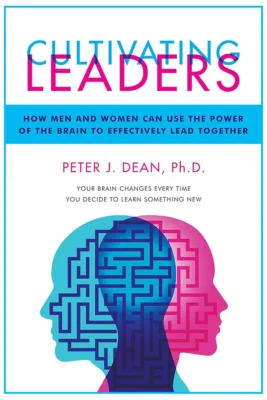
Cultivating Leaders
Cultivating Leaders: A chapter-by-chapter leadership series from executive coach and leadership scholar Peter J. Dean, Ph.D., draws on more than forty years of coaching C-suite executives to reveal how the brain shapes — and constrains — the way we lead. This blog series brings those insights to life one chapter at a time.
Each post goes beyond theory. You’ll find the neuroscience behind executive behavior, practical disciplines for leading under pressure, and a clear framework for building the self-awareness, ethical authority, and communication skills that distinguish great leaders from merely good ones.