

Breaking Into the Boys’ Club series | Part 4. In the previous post, The Confidence Gap Holding Back Women at the Executive Level, I examined why impostor syndrome persists even at the highest levels of leadership — and how women can close that gap by owning their accomplishments, actively seeking feedback, and leading from their proven strengths. Confidence matters. But as I have learned through decades of coaching senior women executives, confidence alone is not a strategy.
Why Every Woman Executive Needs a Strategic Mentor
If you are a woman executive, you need more than belief in yourself. You need a strategic mentor — not just someone who encourages you, but someone who actively advances you.
As an executive coach, I have often helped women leaders identify the right mentor for their next level. I bring objectivity and insight into organizational dynamics that can be difficult to see from the inside. Together, we assess leadership gaps, political realities, and long-term goals — then align those needs with mentors who have the influence and access to truly advance your career. I also challenge women to look beyond comfort and choose someone who will advocate for you in the rooms where decisions are made.
Mentors: The Overlooked Lever for Advancement
Everyone needs mentors to grow and excel — even after reaching senior leadership. Yet research has shown that mentoring relationships often benefit men more than women. Why? Because men tend to use mentors strategically — to gain visibility, access to key assignments, and sponsorship for promotions. Women, on the other hand, often view mentors as supportive allies rather than career accelerators. That distinction is critical.
Support is valuable. Advocacy is transformative.
If we are serious about breaking through the confidence gap, we must rethink how we approach mentoring. The question is not “Do I have a mentor?” The question is “Am I using this relationship strategically to advance my leadership?”
Finding the Right Mentor for You
A strategic mentor begins with clarity. You must first define what you need. Ask yourself:
- Do I need help getting to the next level?
- Do I struggle repeatedly with the same political or organizational issues?
- Am I uncertain about how I’m perceived?
- Do I want access to board opportunities?
- Do I need exposure to another division or strategic function?
- Do I need help navigating the unspoken politics of the organization?
Mentoring is not one-size-fits-all. It is contextual, personal, and deeply strategic, and your answers will determine the type of mentor you should seek.
Mentoring at Every Stage of Leadership
As your career progresses, your mentoring needs evolve. Too many women assume mentoring is only for early career professionals — that is a costly mistake.
Officer Level: Visibility and Strategic Alignment
At the officer level, mentoring becomes more nuanced. You need:
- Insight into what is really happening in the organization
- Visibility at the top
- Direct feedback on style issues that may be limiting your success
Here, your mentor should be someone who has the ear of the CEO, champions talent, and is willing to be candid. Candor is essential. At this level, politeness is not helpful — precision is.
Top Executive Level: Strategic Partnership
Even at the top, mentoring matters. Perhaps especially at the top. You need:
- High-level support
- Strong peer relationships
- Alignment with the CEO’s priorities
- A senior decision-maker aware of your accomplishments
Isolation increases with seniority. A strategic mentor prevents drift, misalignment, and invisibility.
Moving from Passive to Strategic
If you read our earlier post on the confidence gap, you know that self-doubt can subtly erode your executive presence. A strong mentor can help recalibrate that internal narrative, but only if you use the relationship actively.
A strategic mentoring relationship should include:
- Clear goals for advancement
- Explicit conversations about promotion timing
- Requests for high-visibility assignments
- Honest feedback about political missteps
- Advocacy in rooms where you are not present
These conversations require courage and specificity. And yes, they require confidence. Confidence grows when competence is reinforced and when advocacy increases your visibility. A mentor who opens doors reinforces both.
The Mentor You Choose Reflects the Leader You Intend to Become
One of the most important questions you can ask yourself is: Who has the career, influence, or leadership style I want to emulate?
Mentoring is not simply about advancement — it is about modeling. You absorb how seasoned leaders think, negotiate, recover from setbacks, and influence stakeholders.
When women leaders are intentional about mentoring relationships, they accelerate both performance and perception. And perception matters. In many organizations, advancement decisions are made based on reputation as much as results. A strategic mentor shapes both.
Executive Coaching
This is the work I do every day with senior women executives. I collaborate with leaders at the highest levels to elevate their executive presence and thoughtfully select strategic mentors who can amplify their visibility, influence, and advancement.
Contact me if you are ready to approach your leadership trajectory with greater intention.
Breaking Into the Boys’ Club | Read Part 5: Why Women Struggle to Be Heard in Executive Meetings. Women who consistently get heard in high-stakes rooms aren’t louder or more aggressive — they’re more strategically positioned. In Part 5, I unpack the dynamics that silence women in executive meetings and what it actually takes to be heard.
About This Series
Breaking Into the Boys’ Club
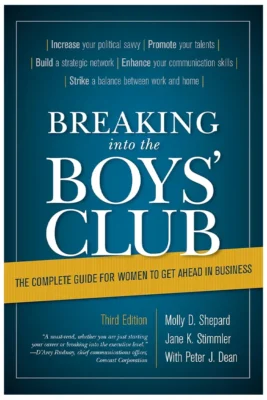
Breaking Into the Boys’ Club is a blog series drawing on the landmark book of the same name by Molly D. Shepard. The book is a complete guide for women navigating the realities of corporate life: the unspoken rules, the invisible barriers, and the practical strategies that make the difference between being overlooked and getting ahead. Through real stories, research-backed insights, and actionable advice, it covers everything from communicating with authority and building strategic networks, to mastering workplace politics, self-promotion, and executive presence.
This blog series brings those lessons to life — one topic at a time — with fresh perspectives for today’s professional woman.